Ruminant Revival’s GB Calf Week Webinar
Knowing the mature weight of the average mature dairy cow in your herd (100 days into her third lactation) is really important. Colin Mason, a vet consultant with Ruminant Revival, has been putting cows on the scales for several years and believes many of them are heavier than we think! That gap is important because almost every growth target set for a heifer – from the weight she needs to be at around 12 to 15 months old, to the time she has her first calf – is worked out carefully as a percentage. Getting those figures wrong could impact the health of cows and calves.
This was a point raised during Ruminant Revival’s GB Calf Week webinar, which focused on a period of time that is often overlooked: the time between weaning and full rumen function, when a calf stops drinking milk and becomes a ruminant eating solid feed. In other words ‘the forgotten window.’
The weaning method
Colin’s recommendation is to stretch milk feeding out longer to nine or ten weeks before weaning even starts, then allow the weaning process to take three to four weeks rather than cutting milk abruptly. Drop milk volume by around 25 per cent, he advises, hold that level for roughly a week so the calf adjusts, then drop by another 25 to 30 per cent and hold again, working down gradually rather than rushing through the process.
Colin suggests weaning by intake rather than age, so a calf that is eating more than two and a half kilos of starter for three consecutive days (typically around ten weeks old) is a better signal of when to stop milk. Everything else about the calf’s routine should stay as stable as possible, and reduction of milk is the only thing that should change during this window.
Of course, this slightly longer approach to weaning means space can become an issue. Keeping calves in rearing accommodation for ten, twelve or sixteen weeks instead of moving them on quickly means it’s difficult to find space for the next batch of week-old calves arriving. It’s a cost that can make sensible weaning plans problematic, and Colin’s advice is to plan housing capacity around the system a farm wants to run in future, rather than the space it happens to have currently.
Building a rumen that can cope
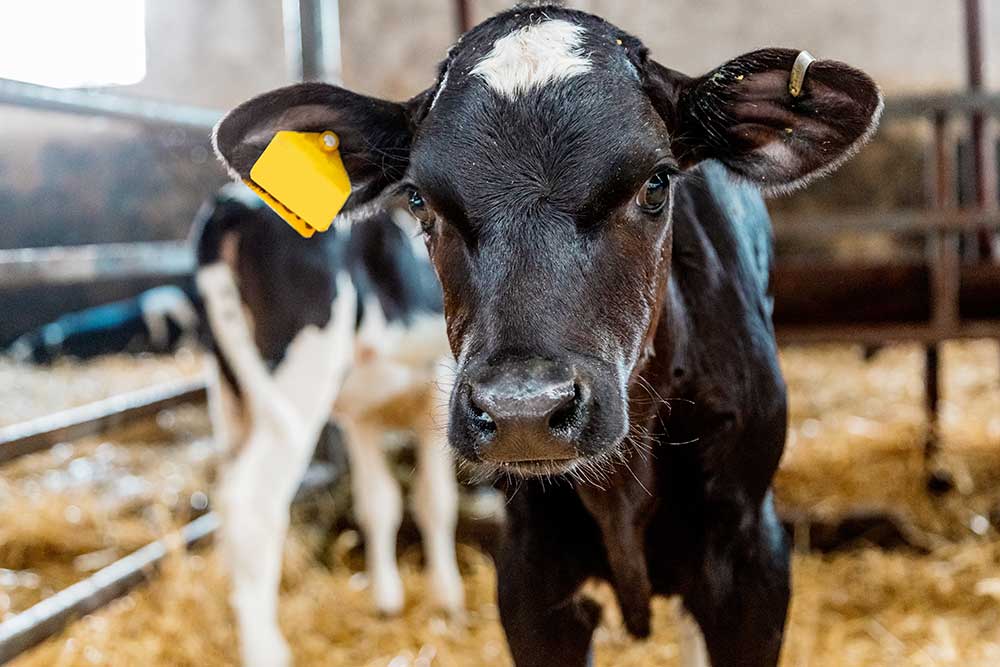
A calf is born with a rumen (the first stomach) that is small with limited function and the aim is to change this before weaning. A calf needs to be exposed to starter feed from day one, while milk is still the main part of its diet, because eating solid feed is a learned behaviour rather than an instinct. The starter feed needs to look appetising and attractive – food left out until it turns soft, damp or stale simply won’t be touched, so it needs to be fresh, palatable and changed regularly. Calves need roughly three to four litres of clean water for every kilo of starter feed they eat, and even more in hot weather. Grazing is also a learned behaviour, and calves need nutritional support while they work it out, as they do with starter feed indoors.
Potential disease
Coccidiosis is a disease to watch out for around weaning with calves either housed or grazed. A pasture that happens to be contaminated with Coccidiosis for one year tends to stay contaminated during the next, because the organisms survive very well in the environment.
A solution is to ensure the calves graze in higher grass so they do not come into contactwith the parasites that remain closer to the ground. However there is a trade off here as longer stemmier grass has a reduced nutritional quality. There is a balance to be struck as building coccidial immunity gradually is the best way to manage the disease (which needs some exposure to the parasite), rather than relying on treatment after calves become unwell.
Weaning can be stressful, and stress raises cortisol. Cortisol suppresses the immune response, so increases in respiratory disease during weaning are not a coincidence. Most calf-rearing accommodation already carries most of the relevant respiratory pathogens. Reducing the stress around weaning, and reducing the mixing between groups of cattle that can spread pathogens further, are two effective options to bring that risk down.
Weaning tends to land just as colostral immunity and any early vaccine protection are fading, so boosting vaccination ahead of weaning rather than reacting once illnesses appear gives a calf its best chance of getting through the window without a respiratory setback.
What to take from this
This webinar shed light on an important stage in a calf’s life. A calf’s future – its age at first calving, how many lactations it goes on to complete, its resistance to disease – is largely set during the first 16 weeks of life including weaning . Getting a calf to eat and drink successfully before weaning starts, then taking the time to take milk away slowly rather than quickly, is what makes this forgotten window work in a calf’s favour.
If you could not attend the webinar, you can watch the full video on our YouTube channel here.