Beat the Heat, Part Three

AUTHOR: Colin Mason
BVM&S BSc Cert CHP MRCVS
Heat stress is no longer a problem confined to housed dairy cattle. In this third and final part of our series, Ruminant Revival vet-consultant Colin Mason turns his attention to grazing herds. This blog explores the limitations of current heat monitoring tools, practical steps farmers can take, and the long-term adaptations that will help herds thrive as UK summers intensify due to global warming.

A different kind of exposure
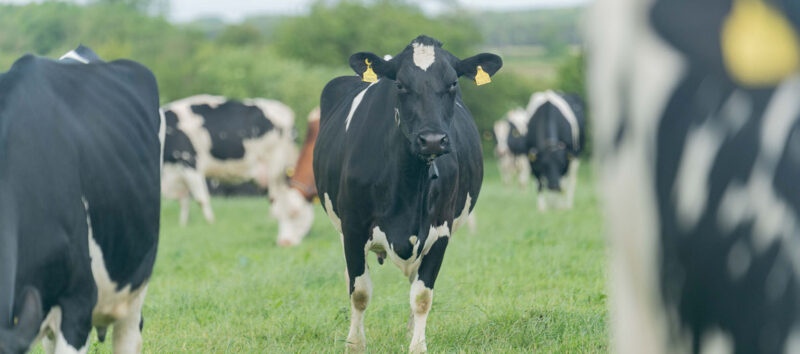
The standard Temperature Humidity Index used across the UK and US was designed with housed cows in mind. It accounts for temperature and humidity, but it does not account for two of the most critical factors affecting a cow standing in a field on a hot summer’s day: radiant heat from direct sunlight, and wind speed. A cow in a shed and a cow in full sun at the same THI reading are not experiencing the same level of heat load.
White-skinned cattle present a specific challenge that is worth acknowledging: they are genuinely more susceptible to photosensitisation and sunburn, which can cause blistering and skin cracking.. For affected individuals, the only reliable management is to move them out of direct sunlight and into housing. Farmers with a high proportion of white-skinned animals in their herds should factor this into their summer management planning.
Open doors
One of the most effective short-term interventions available to grazing farms is simply allowing cows to choose. Implementing an open door policy – giving the herd access to sheds or covered areas between roughly 10am and 5pm during periods of high heat load – lets animals self-regulate their own thermal environment. Most will come in; some will stay out. Both choices are valid. Of course for this to be valid, the indoor environment needs to be well ventilated with cooling fans installed as well.
The practical challenge is the labour involved in moving large numbers of cattle in and out of buildings repeatedly through the day. Batt-latch gates, which are timer-controlled and releas automatically to allow cows to move through at their own pace, largely remove this challenge. Rather than being pushed through as a group, cows can move in single file when they choose to – a considerably less stressful experience for the animals, and less labour-intensive for a farmer.
Rethink the milking schedule
Gathering cows in a yard during the hottest part of the day compounds heat stress significantly. Where practical, shifting milking times to early morning and evening can meaningfully reduce the thermal burden on the herd. This is a significant operational change that has to be balanced against staff schedules and farm practicalities, but it is worth having the conversation before a heatwave hits rather than during one.
Water Cooling
This can be particularly useful for grazing cattle to cool in collecting yards at milking time. Misting systems – which release fine water droplets act to cool the atmosphere and can help in collecting yards. Water soakers add more water into the system to wet the cows which then cools them down through evaporative cooling. Clearly this does not work through the whole day but every little help. Many farmers are improvising these systems using existing hoses and volume washers available close to the collecting yard. Permanent systems are available and are more useful given the regularity of heat stress events.
Breading for heat tolerance
Australia has developed a genomic index that allows breeders to actively select for heat tolerance in dairy cattle. This is not yet available in the UK, but the direction of travel is clear. Future breeding programmes are likely to incorporate heat resilience alongside production, health, and feed conversion efficiency as a recognised selection trait. For farmers making breeding decisions now, it is worth keeping an eye on how this develops because the choices made over the next five to ten years will shape how well UK herds cope with the summers ahead.
Thinking long-term: shade and biodiversity
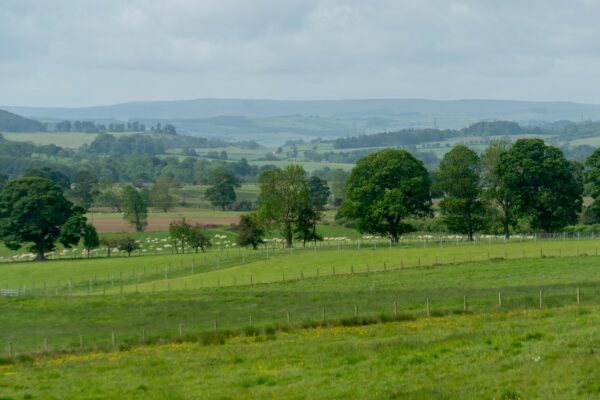
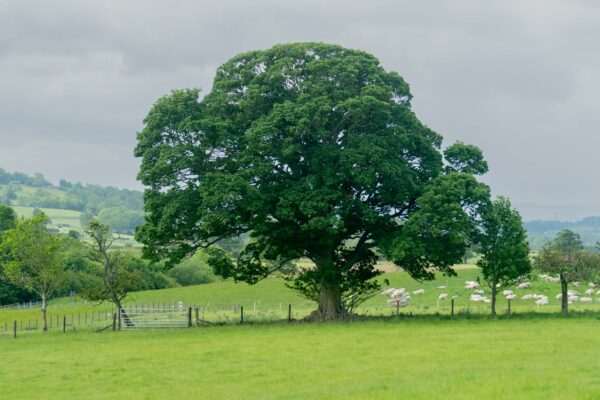
The best solutions to heat stress in grazing systems are the ones that take time to establish. Planting trees and hedgerows in and around fields provides natural shade, reduces wind exposure, and can improve the wider farm ecosystem. Some farmers resist tree planting out of concern that it will increase biting fly populations and drive up mastitis risk. However the evidence suggests the opposite: increased biodiversity supports larger bird and bat populations, which naturally regulate fly numbers.
This is the final part of our three-part series on heat stress in UK dairy herds. Parts One and Two are available on the Ruminant Revival website.
For advice on managing heat stress in your herd, get in touch with the team at Ruminant Revival.