Guest Blog
The Financial Benefits of Healthy Soil: For Vet and Med and Beyond
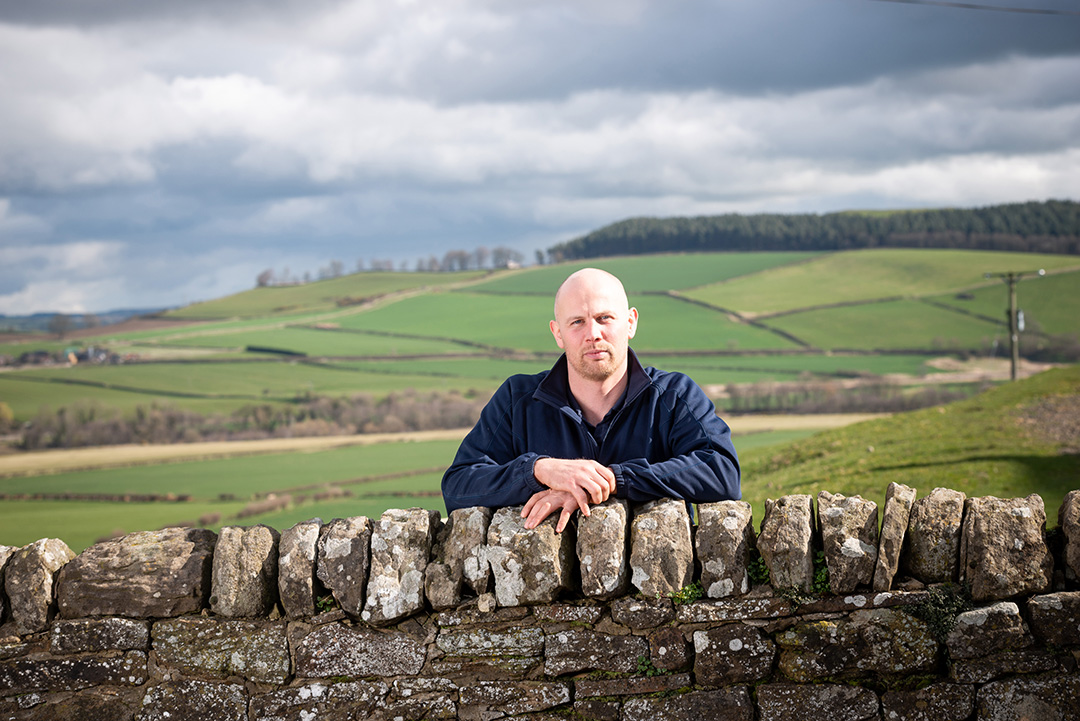
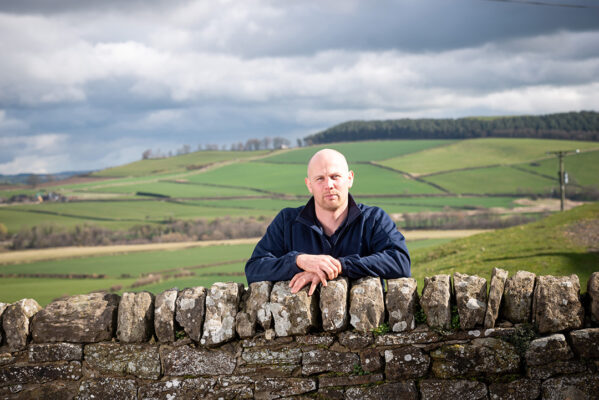
AUTHOR: Stuart Johnson,
Regenerate Outcomes mentor and Soil Farmer of the Year 2023
Improving soil health can bring multiple interlinked benefits for your farming operation.
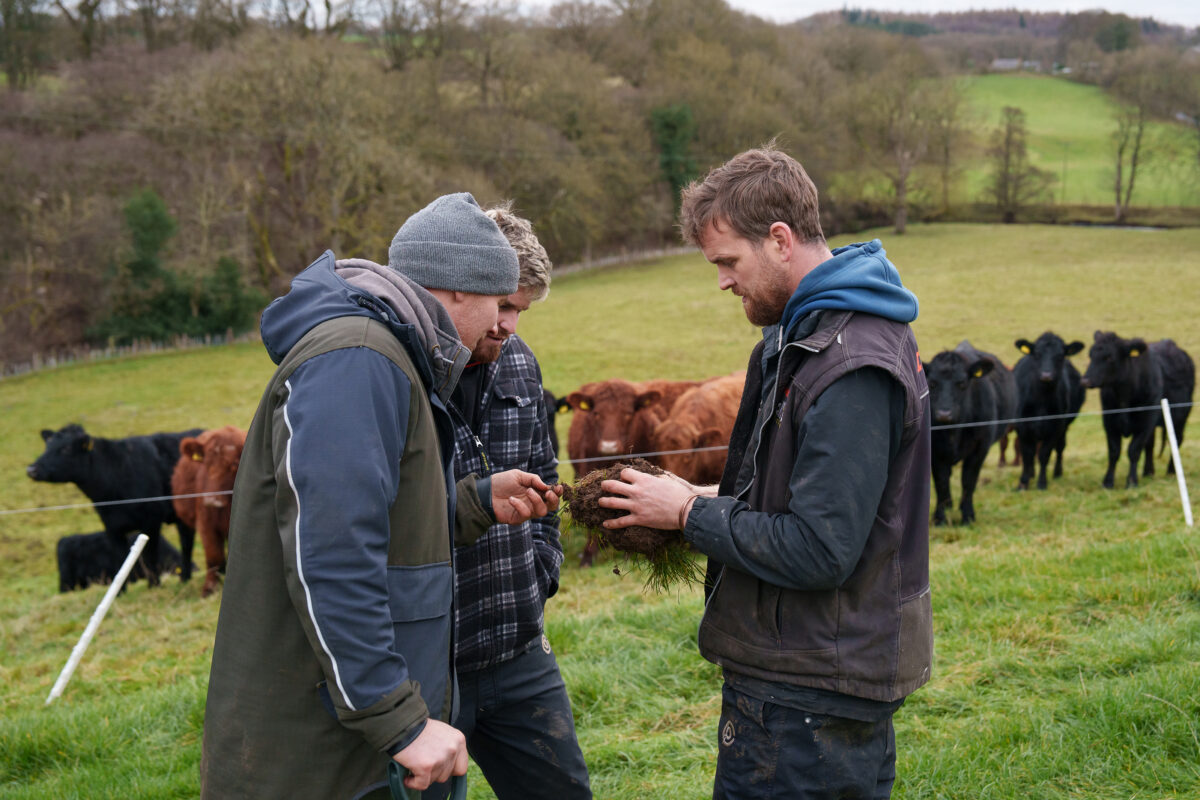
Crop and livestock performance, resilience to extreme weather, nutritional density, increased wildlife and biodiversity; all of these stand to benefit from healthier, functional soils. Which of them you value the most will depend on your particular context and goals.
However, for most farmers, there is one priority which tends to come before all others – running a profitable business.
This was definitely my priority when I began focusing on soil health at our farm in Northumberland. Over the last 15 years I have learned from personal experience how much of a direct correlation there is between adopting regenerative practices, cutting input costs and other overheads and improving your bottomline.
I now work alongside my other Regenerate Outcomes mentors with over 200 farms across the UK, supporting them to implement methods so they can do the same.
Fewer inputs, more organic matter
The financial benefits of healthy soil can be seen particularly clearly in the results of a long-term study by Understanding Ag in the United States.
Understanding Ag tracked the progress of over 360 farms they were working with over one, three and five years as they adopted the new methods.
Results for livestock farms included, on average, a 38% reduction in veterinary bills over five years, 40% fewer days using processed feed, a 35% increase in forage production and a 62% increase in organic matter.
The full results can be seen below:
Effect of regen ag on livestock farms (average over the study area)
|
Metric |
Year 1 |
Year 3 |
Year 5 |
|
Days on Processed Feed |
0% |
-21% |
-40% |
|
Veterinary Medicine Bill |
-5% |
-18% |
-38% |
|
Forage Biomass Production |
+7% |
+19% |
+35% |
|
Soil Organic Matter |
+7% |
+24% |
+62% |
Reduced vet and med
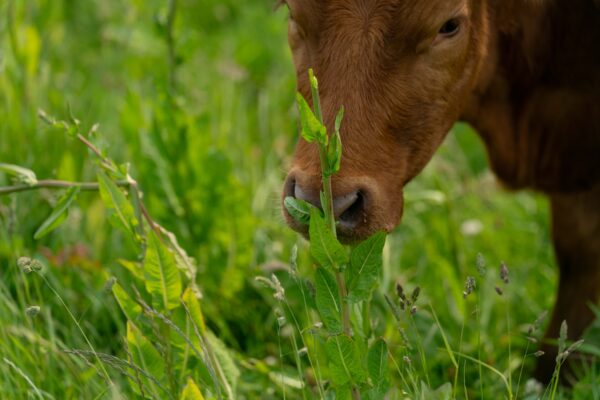
One of the core principles for improving soil health is to encourage a diversity of plants in livestock forage. This will have very direct benefits for their health and, in turn, a reduction in the necessity for veterinary and medicinal interventions.
Just like humans, livestock require a diverse, nutrient rich diet in order to remain healthy. This is because whatever they eat is reflected in their rumen microbiome, similar to ourselves. The more diverse the diet, the more diverse and resilient the microbiome. Feed conversion is better and the ruminant is healthier.
Diversity also improves animal health by giving them a choice over what they can eat.
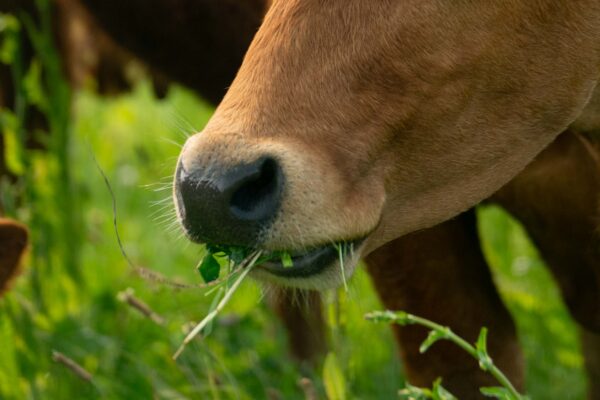
Livestock have a natural ability to browse and choose the forage which contains the nutrients they need. Often they are looking for secondary compounds, also called phytonutrients, which bring added health benefits.
Plants produce phytonutrients as part of processes beyond the job of building and maintaining their main body structure. These include resistance to UV rays or even producing toxins which discourage animals from eating them.
However, they will be much more effective at producing them if they are grown in a healthy soil with an active and diverse microbial and fungal population.
In conventional agriculture, farmers are very focused on protein, carbohydrate and fibre, which are the primary nutrients. But animals need a lot of secondary nutrients as well, some of them are medicinal, some of them are natural anthelmintics and some of them are antioxidant, which helps with metabolic and physiological stress.
If we have healthier soil, we will have healthier and more diverse plants and, therefore, healthier livestock, reducing our expenditure on vet bills.
The benefits also go beyond diet.
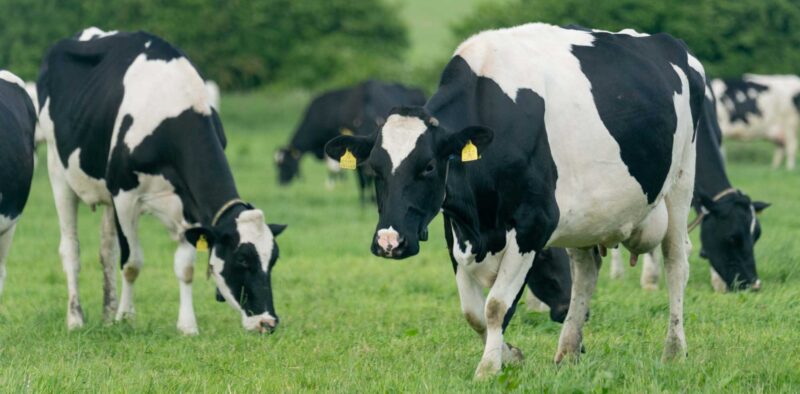
One of the key practices to improve soil health in livestock farming is mob grazing, also called AMP (adaptive multi-paddock grazing), in which animals are moved from one paddock to another on short rotations, giving plants time to rest and grow between grazing events.
These frequent rotations help move animals away from parasites before they develop into larvae which can be eaten. There is also a limit on how high larvae will climb as cover height increases. This means longer covers can help decrease the risk of livestock ingesting parasites.
A regenerative livestock system will also focus on keeping livestock outside for as long as possible. Living in an open, natural environment promotes better health, with less chance of spreading infection. They also tend to be better exercised with better mobility and so more likely to calve and lamb unassisted.
More forage and less processed feed
Diverse AMP grazing systems have been shown to outperform continuous grazing or set stocked systems by generating more biomass. This is partly because diverse plant species have differing growth cycles and can access nutrients at different depths to feed a wide array of beneficial soil microbes.
Allowing forage to grow taller also allows plants to mature and produce seeds that fill gaps in the pasture, while concentrating livestock in smaller paddocks fertilises it with dung, which is trodden into the ground along with seeds.
This net result is that we can grow, graze and fertilise our forage in a circular system, reducing the need to spend money on bought-in feed.
Less reliance on fertiliser and supplementary manure
AMP grazing catalyzes a positive feedback loop of diversity and productivity.
More forage and more diverse leaf architecture means more solar energy is captured. More captured solar energy means more carbon exudates are sent to feed life in the soil. These microbial and fungal communities cycle nutrients into plant-available forms, as well as building soil structure.
At the same time, microbial activity helps fix atmospheric nitrogen and cycle organic forms of nitrogen into plant-available forms.
By improving plant diversity and biological function, we can make better use of the nutrients already present in the system and reduce our reliance on purchased fertiliser.
There is 79 million kg of nitrogen in the air above every hectare of land. As farmers we need to work out how to fix that nitrogen into the soil and make it available to plants. Nurturing a diversity of living plant roots in the ground will encourage the soil organisms that are ready to do this work for us.
Alongside the cost savings that can come from reducing fertiliser use, bought-in feed and vet and med, many of the practices used in regenerative livestock farming also cut fuel usage. Mob grazing relies on animals to distribute manure on fields, rather than a mechanical spreader, while longer periods of outwintering require less transport of feed and pen scraping.
As is always the case, making changes in one area can bring compounding and cascading effects across your farming operation.
Regenerate Outcomes supports farmers to grow profits and improve crop and livestock performance. Receive one-on-one mentoring from experienced regenerative farmers to increase the productivity of your soil and cut input costs. We also Baseline and measure changes in soil carbon to generate verified carbon credits which you can retain or sell for additional income. There is no cost to join and no cost to leave.
Find out more by visiting www.regenerateoutcomes.co.uk