Epigenetics and observation – Tools for livestock improvement
AUTHOR: CHARLI LLOYD
BVSC MRCVS
Mixed Practice Vet, Farmer and Consultant
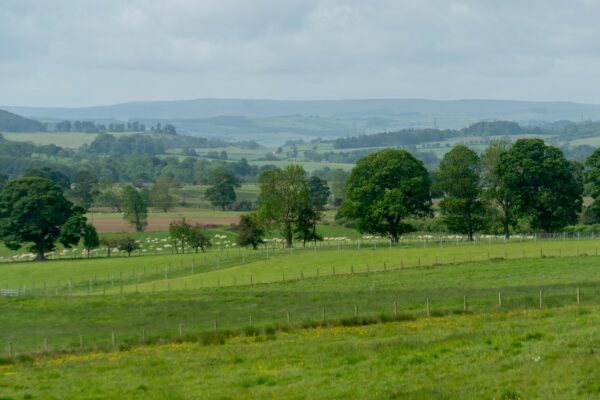
Every farm has its own story —shaped by soil type, local weather patterns, management history, and even the quirks of its fencing and paddock layout. Successful livestock farming isn’t about forcing animals to fit a system – it’s about selecting animals that naturally do well in that specific environment. Whether you’re managing a low-input hill block or a carefully rotated mixed grazing setup, the animals you choose to work with will determine how smoothly that system runs.
This is where powerful, often underrated, tools come in such as observation and epigenetics. Together, they help us build herds that aren’t just productive, but well-adapted, resilient, and far less reliant on interventions.

Matching Livestock to the Land
Every farm is different and therefore so are the challenges that face it. A windswept upland farm in Cumbria faces different challenges to a heavy clay lowland in Somerset. Trying to make animals bred for a high-input, housed system perform on forage-only pasture is like expecting a tropical plant to thrive in a frosty Yorkshire winter—it’s a mismatch from the start.
Success comes from working with the factors that you have such as geographical location, climatic conditions, soil type and management history. These factors all contribute to what your pasture can naturally produce without the need for additional inputs and therefore can be used to select livestock that complement the system. Rather than chasing genetic trends or aiming for uniformity, the real opportunity lies in selecting animals that consistently perform under your conditions. There may also be other unique opportunities that our environment has to offer that may have been overlooked if we were not looking at the system as a whole.
The power of observation
Genetic variation gives us something to work with—but observation is what turns potential into progress. The key lies in systemic observation and recording which goes beyond standard breeding values. It is crucial that the important traits for your specific system are identified to allow strategic breeding and management decisions that work towards the aims for your particular farm.
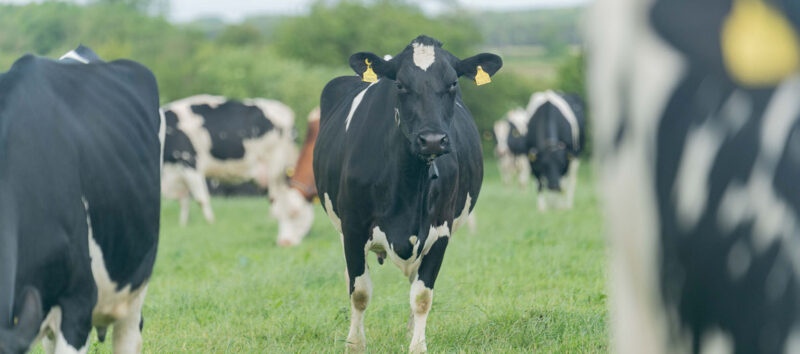
Which animals attract the most flies? This seemingly simple question reveals important genetics. Flies gravitate toward animals with lower hair follicle density. Each follicle connects to a sebaceous gland that produces a natural fly repellent therefore these animals with slick, uniform, shiny coats experience less stress and disease transmission from flies. This is a valuable trait in outdoor systems.
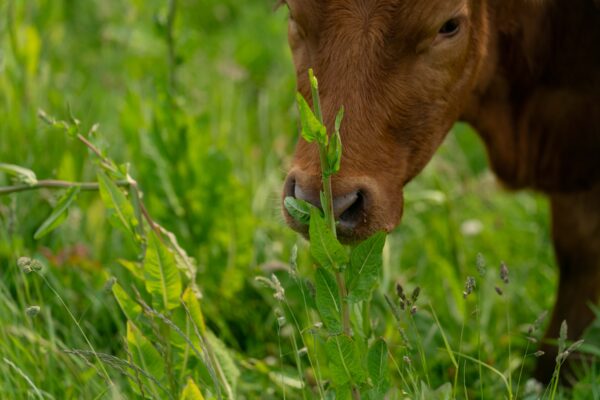
Which animals consistently have dirty perineums? This can indicate parasitism or poor dietary selection, as some animals may choose highly proteinaceous pasture species without balancing their intake with more fibrous material.
Rumen fill and faecal consistency provide daily health indicators. Well-functioning ruminants maintain consistent rumen distension and produce uniform, well-formed dung. This is a clear indicator of harmony between the soil microbiome and grazing animals, especially in systems that prioritise soil health. Animals that consistently deviate from these norms may not suit your system, regardless of their breeding index.
Strategic culling for improvement
When animals stand out for poor performance whilst others thrive, we must ask why. If a cow repeatedly needs calving assistance, or a ewe abandons her lamb every spring, she’s not suited to your system—no matter her pedigree. These animals are not fitting in the system that is designed to maximise profit from your farming operation.
Culling isn’t about being ruthless—it’s about being realistic. Every hour spent assisting a poor-performing animal is time you could spend moving fences, managing pastures, or monitoring weaned stock. Top-performing farms understand this. They set breeding goals and stick to them, even when decisions are tough.
Research supports strategic culling: the most profitable livestock businesses regularly review performance and remove the bottom 25% of animals (the time-consuming, least adapted animals). On average, these top-quartile beef and sheep farmers earn £50,000 more annually than bottom-quartile operations. That extra margin comes from fewer inputs, fewer setbacks, and more consistent output from animals that can survive in the system.
The Role of Epigenetics
Epigenetics is how environment influences gene expression. In principle it is an animal’s ability to survive and thrive in the conditions you provide. By selecting animals that perform well in your system, you are identifying genetics suited to your environment.
Animals raised on your farm from birth—especially those from homebred mothers—tend to work best with this kind of selection. They’ve adapted not just genetically, but behaviourally and immunologically to your setup from early exposure to your pasture mix, handling system and local pathogen profile. You also have the animal’s complete production history, including maternal and possibly grandmaternal performance which compounds these other benefits.
When you select and retain animals that thrive in your conditions, you’re doing more than improving genetics. You’re fine-tuning the way animals interact with your specific environment, reinforcing traits that work here, not just in theory.
Making It Practical
You don’t need high-tech tools to start observing and recording. In fact, many of the most effective insights come during routine tasks—tagging lambs, moving cattle, or checking stock after a storm.
- Set clear breeding objectives based on what your system demands (e.g. calving ease, parasite resistance, longevity).
- Build observation into your daily rhythm—body condition scoring, noting behaviour, assessing coat and rumen fill.
- Record what you see, even informally at first. Over time, patterns will emerge that will guide breeding decisions.
If you want to add technology, precision farming tools are becoming more accessible. As of 2020/21, 27% of English farms had adopted some form of precision tech—whether for grazing management, health monitoring, or fertility tracking. Used well, these tools can enhance what you’re already seeing as well as showing measurable improvements in sustainability metrics.
Building Resilience Across the Board
This approach builds multiple resilience layers providing whole-farm resilience. By breeding and selecting adapted animals (genetic resilience):
- You reduce the need for bought-in feed, vet visits, and interventions while improving performance (economic resilience)
- You support environmental resilience by the animals that you select working in unison with natural systems rather than against them
Evidence suggests that healthier, well-managed herds yield environmental benefits. Controlling endemic diseases in cattle herds improves feed efficiency and reduces methane emissions by 10-22%. Better animal health management has contributed to a 55% reduction in UK farm antibiotic sales since 2014, demonstrating how observation-based selection supports broader sustainability goals.
A Long-Term Payoff
Epigenetics and observation aren’t quick fixes. They’re long-term strategies that compound over generations. Each breeding decision shapes your herd’s future adaptation to your unique environment. This patient approach builds herds that require fewer interventions whilst delivering consistent performance.
Modern farming faces pressure to adopt complex technologies, but sometimes the most powerful tools are the simplest – watching animals, recording observations, and breeding from those that thrive. Combined with an understanding of how the environment influences genetic expression, these practices provide a sustainable approach to enhanced productivity, profitability, and animal welfare.
The goal isn’t just productive animals – it’s animals perfectly adapted to your environment, requiring minimal intervention whilst contributing to a resilient, profitable farming system.
Sources:
AHDB. (2024). Characteristics of Top-Performing Farms 2024. Available at: https://ahdb.org.uk/knowledge-library/characteristics-of-top-performing-farms-2024
Department for Environment, Food and Rural Affairs (DEFRA). (2022). Fertiliser Usage on Farm England 2021 Statistics Notice. Available at: https://www.gov.uk/government/statistics/historic-fertiliser-usage-on-farm-england/fertiliser-usage-on-farm-england-2021-statistics-notice-published-26-may-2022
Animal and Plant Health, Animal health solutions are key to reaching our emissions targets. Available at: https://animalplanthealth.co.nz/greenhouse-gasses/
One Health Outlook. (2023). Potential greenhouse gas emissions reduction in livestock systems. Available at: https://onehealthoutlook.biomedcentral.com/articles/10.1186/s42522-023-00089-y
Veterinary Medicines Directorate. (2022). UK VARSS Report: Veterinary Antimicrobial Resistance and Sales Surveillance 2022. Available at: https://assets.publishing.service.gov.uk/media/63a41fc1d3bf7f375c7d832b/TP_FINAL_VARSS_Highlights_2021_2022_41102022-accessible.pdf