Improving animal health – The stepping stone to reduction of livestock emissions?

AUTHOR: Lahra Harcourt-Brown
BVM&S MRCVS
Large Animal Vet and Consultant
There is vast evidence to support that improved productivity and efficiency in livestock have a direct influence on environmental impacts from livestock production. Healthy livestock is every food producer’s aim, and with growing pressure of environmental guidelines, we discuss the link between livestock health and greenhouse gas emissions.
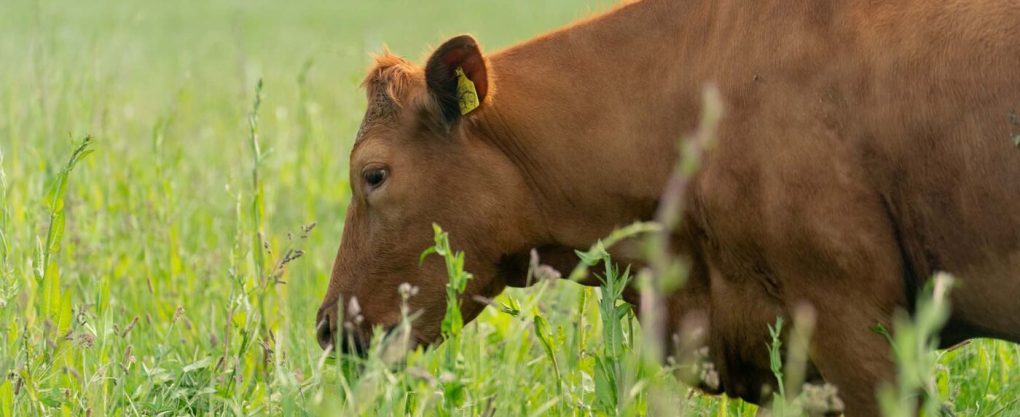
Factors such as age at first calving are linked with higher survivability and lifetime milk yield, along with lowering feed costs and lowering the carbon footprint. This is common sense, and the 24-month target is well established on dairy farms.
Surprisingly, the effects of reduction of livestock diseases and the resultant impact on greenhouse gas emissions have very little published evidence behind them. Efforts are mostly centred around financial quantification. The financial benefits of controlling common diseases are well known – eradication of Bovine Viral Diarrhoea from a positive unit may gain £2000 to £14000 annually. However, what is this farm gaining in terms of its greenhouse gas emissions status, specifically from reducing disease?
Links drawn in a 2023 study showed inadequate control of livestock diseases can reduce total milk or meat yields, an obvious fact to anyone working with production livestock. But what does this mean for the GHG emission stats? (Capper, 2023). It would make sense that slower rearing, increased medicine use and potential reliance on additional bedding and feed, in some contexts, could be associated with decreased efficiency and an increase in emissions. With the caveat that this is an incredibly speculative comment, and this is a nuanced and under-researched subject. Published work from 2024 leads us forward to providing options for quantification of livestock health statistics nationally, with the hope of connecting these to emission reduction estimates (Kyriazakis, 2024).
Kyriazakis noted that immediate improvements to animal health, rather than global efforts to reduce livestock numbers, have the ability to provide significant mitigation to livestock emissions. However, due to the challenge of quantifying these benefits, the benefits of this are often overlooked.
One would presume an increase in efficiency resulting in lower morbidity and mortality on farms, such as the issues seen with an endemic Bovine Viral Diarrhoea outbreak, will naturally result in lower GHG emissions. It is likely that the same thinking could be applied to most livestock health scenarios. Reduction of disease, healthier animals and improved efficiency.
Reduction of GHG emissions is of global importance, and the role of livestock health optimisation is one of growing interest. The role animal health and welfare play in pursuing sustainability targets is clear to those involved in the sector, with producers and vets on the same page in the pursuit of the improvement of livestock health.
Are you doing everything you can to improve livestock health on the farm? If you would like additional veterinary support in pursuit of your sustainability journey, please get in touch with us.
Further reading:
Capper, J.L. (2023). “The impact of controlling diseases of significant global importance on greenhouse gas emissions from livestock production,” One Health Outlook, 5(1). Available at https://doi.org/10.1186/s42522-023-00089-y.
Kyriazakis, I. et al. (2024). “Improve animal health to reduce livestock emissions: quantifying an open goal,” Proceedings of the Royal Society B: Biological Sciences, 291(2027). Available at https://doi.org/10.1098/rspb.2024.0675.