Developing sheep for regenerative farming
AUTHOR: Tony Martin & Lahra Harcourt-Brown
Tony and Mary Martin farm part-time on 90 acres near Wark, and for them, having sheep that take minimal time is key. They are also keen to get more wildlife on the farm, which had been intensively managed through set stocking of commercial sheep in the past.
They started out with six Wiltshire Horn sheep for quality meat and no clipping, but found them not hardy enough for Northumberland, with a tendency to shed too early in the spring.
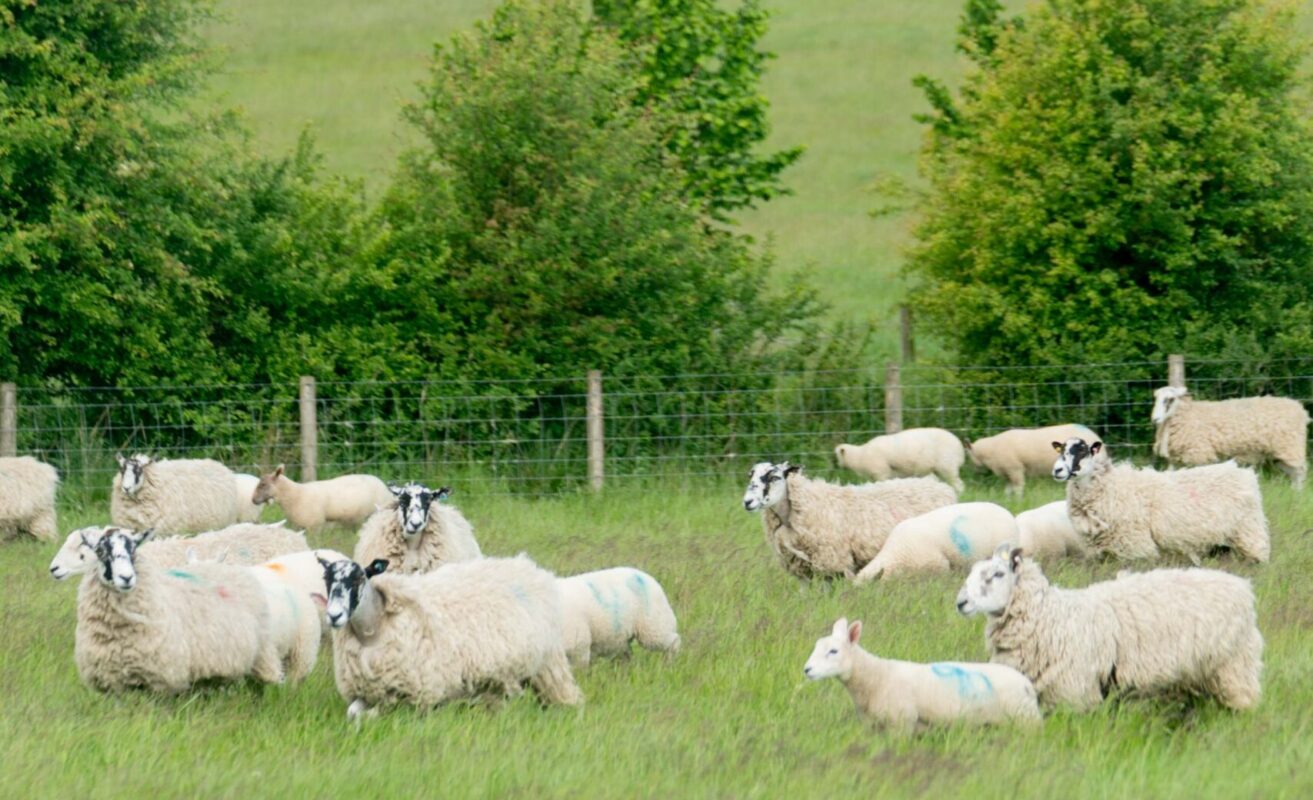
Image not of Tony Martin farm.
They have crossed with Soay and Castle Milk Moorit to seek a hardier mix. Interestingly, recent genetic analysis has indicated that Castle Milk Moorit are also a mix of Wiltshire Horn 17%, with Soay 28%, Shetland 36.7% and Manx Loaghtan 18.3%.
Sheep with a high percentage of Soay genetics were rather too wild for easy management but are proving more resistant/resilient to worms. Some Blue-faced Leicester, Zwartble and Cheviot genetics have also been introduced through cross-bred tups to increase size and milkiness.
Having built up numbers, they are now heavily selecting for sheep that thrive on their farm and meet their low-input aspirations. They lamb late and outdoors, timing for the spring flush of grass for milk production, and aim for compact lambs, very easy lambing, excellent mothering and reasonable growth rates on a grass-only diet. The native breeds result in particularly attractive lambs with small heads that are fast to their feet.
Some of the crosses have resulted in a heavier fleece and poorer shedding, leading to more work clipping and crutching, so future selection will aim is for a compact fleece, bare bellies and thorough shedding in April/May.
With the hybridisation, health problems and lambing interventions have definitely reduced. Rotational grazing of smaller fields is progressively being adopted, and this is also reducing requirements to worm, whilst hopefully, benefitting dung beetles and other wildlife. Willow are being planted in the hedgerows as a source of cobalt for the lambs. Whilst the aims of the breeding programme was to reduce the workload required keeping sheep, the results tie in well with regenerative farming approaches, reducing chemical use and bought-in feed, improving health, reducing antibiotics, and hopefully resulting in healthier and more productive soils.
A view from the veterinary consultant, Lahra Harcourt-Brown:
It is a pleasure to see Tony and Mary’s approaches on their holding to promote resilience in their flock. In addition to the breeding and management choices, every effort to combine agroforestry and the improvement of wildlife habitats has been made on farm. I had an enjoyable farm walk, being shown the hard work in maintaining and planting hedges on farm, creating thoughtful passageways through the farm with native tree and hedge species. These have facilitated wildlife corridors, easier paths to navigate vehicles between fields, as well as methods of moving the stock. There is also the added benefit of this ground remaining as truly clean grazing, should the need arise to provide livestock access to these sections.
There has been a clear benefit to maintaining and planting of hedgerows throughout the ground, with a propensity for ewes to lamb under the protection of the hedges. It will be interesting to see how the diversification of lamb diet to include willow will affect lamb growth. There has also been an appreciable increase in wildlife species since the establishment of the farm.
This is a key example of stock observation and adaptability in action – all whilst promoting and supporting the natural environment on farm and embracing agroforestry principles.