Case Report
Farm-Based Strategies for Welfare Gains and Productivity
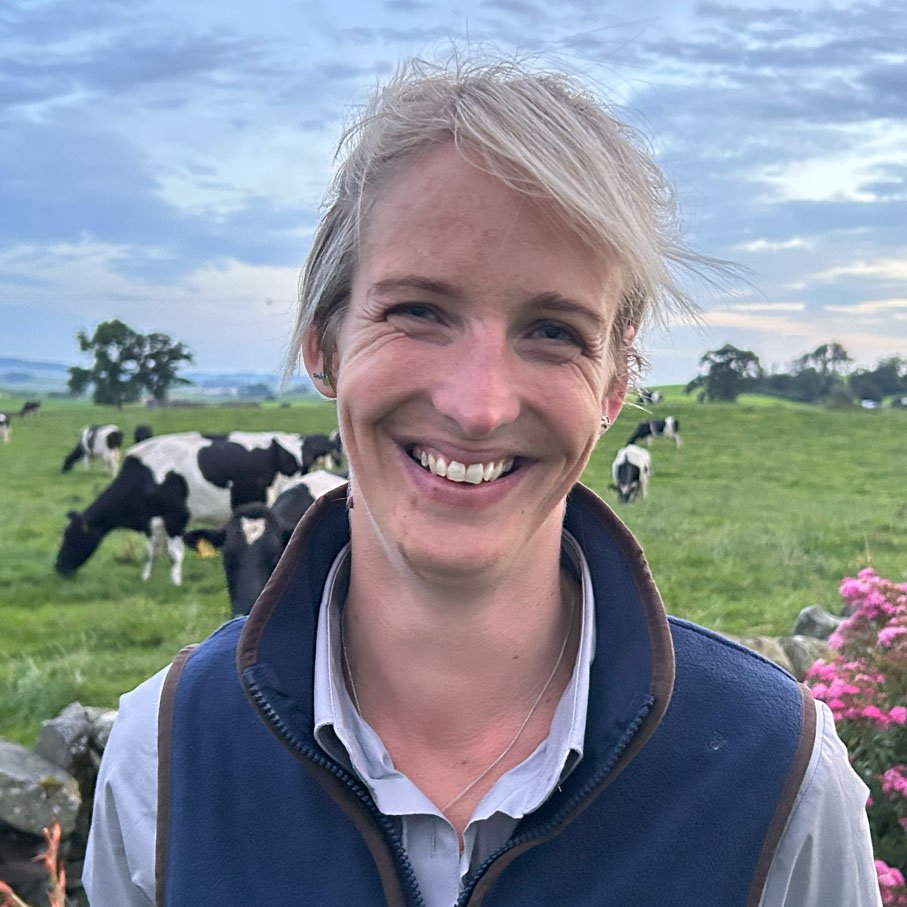
AUTHOR: Ali Haggerty
BVMS CertAVP MVM MRCVS Vet Consultant
Introduction: A shared challenge, two different farms
Ruminants have a syndesmochorial structure to their placenta. This means that maternal immunoglobulins are primarily transferred to the neonate through colostrum after birth. Colostrum is a rich source of essential immunoglobulins and macronutrients such as carbohydrates and fat for energy, as well as other bio-actives important for neonatal programming, gut microbiome development and metabolic processes. This neonatal nutritional and immunological support is critical for survival and long-term health.
This case study examines two approaches to colostrum management in different ruminant systems. It highlights how varying working styles require tailored strategies to maximise welfare and productivity. Part one stresses the value of sustained investment and long-term relationships—short-term interventions rarely achieve lasting gains. Part two demonstrates a data-driven investigation, producing clear, evidence-based recommendations with measurable year-on-year improvements.
Success in youngstock rearing relies less on individual products and more on a deep understanding of the whole system—the animal, the people, their routines, the constraints they face, and the opportunities for improvement.
Dairy calf health – Longevity in improvements and change management
Farm Overview
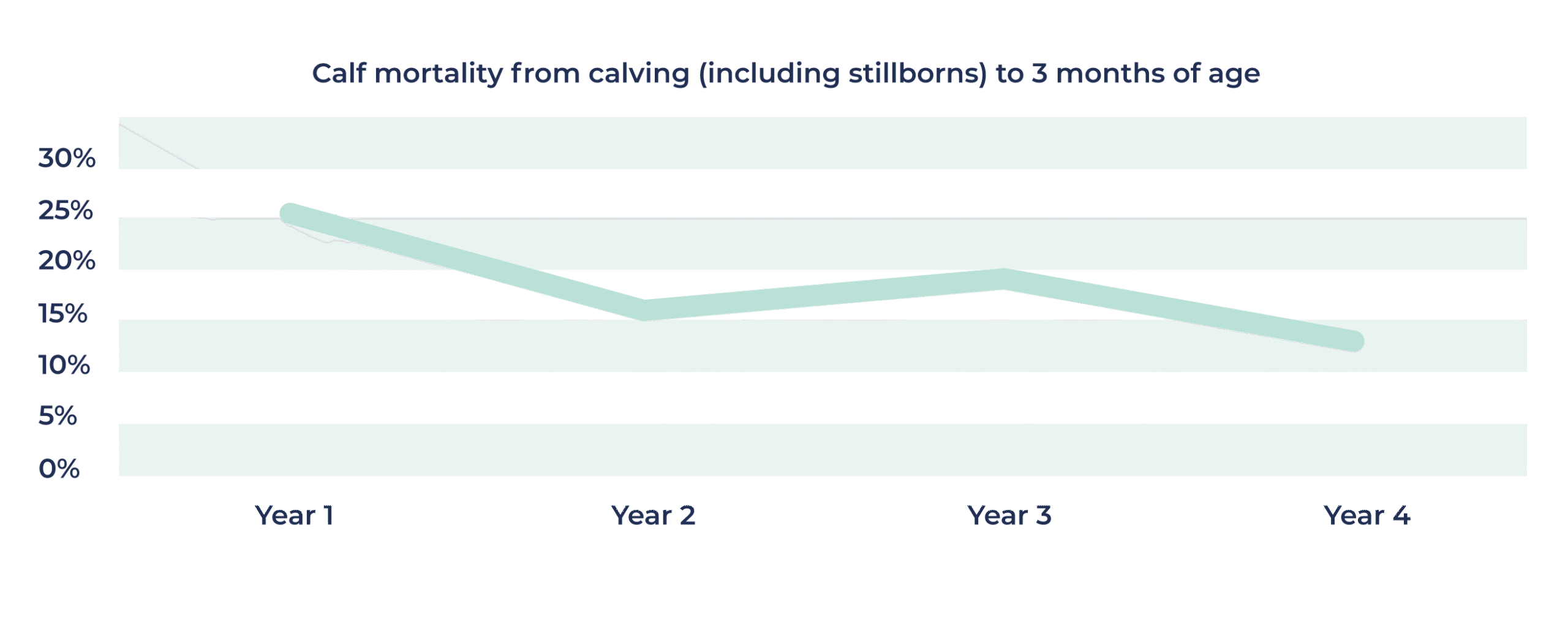
This case study was conducted on a 500 cross bred cow pasture-based spring block calver. The challenge identified was variable calf health morbidity centring around scours, leading to year-on-year fluctuations in calf mortality.
Methods
Year-on-year reviews and ‘in the moment of calving’ monitoring enabled a focused, holistic look to balance the scales of disease challenge vs immunity (colostrum and nutrition).
Findings and actions
|
Year 1 |
Year 2 |
Year 3 |
Year 4 |
|
|
FPTI 20 % |
FPTI 19 % |
FPTI 15 % |
FPTI 10 % |
|
|
Identified challenge around scours |
Calving box cleanliness |
Calving box cleanliness |
Calving box cleanliness |
Calving box cleanliness |
|
E.coli identified as a scour pathogen with multi drug resistance. |
Cryptosporidium |
Nutritional and feeding challenges |
||
|
Actions |
Early detection and prompt, effective treatment protocols of sick calves Focus on appropriate disinfection and cleaning protocol from calving box to calf housing Colostrum management with a highlighted focus of colostrum hygiene |
Early detection and prompt, effective treatment protocols of sick calves Focus on appropriate disinfection and cleaning protocol from calving box to calf housing Introduction of pasteurisation of colostrum (see below) |
Review of milk powder management and delivery including:
Staff management in relation to transition to once per day feeding |
Table showing the improvement in colostrum bacterial load after pasteurisation. TCC/CFU/ml = Total Coliform Counts Colony Forming Units. Green boxes indicate the count is below industry threshold of 10,000 CFU/ml and red boxes indicate this cut point is exceeded. Colostrum was samples from three critical control points.
In this case pasteurisation has helped reduce the bacterial load of the colostrum delivered to the calves
|
Sample |
TEAT TCC CFU/ml |
COLLECTION BUCKET TCC CFU/ml |
POST PASTEURISATION TCC CFU/ml |
|
A |
10000 |
90000 |
0 |
|
B |
0 |
4000 |
0 |
|
B |
0 |
121000 |
0 |
|
D |
47000 |
50000 |
0 |
|
E |
TNTC |
95000 |
20000 |
|
F |
3100 |
15000 |
0 |
|
G |
900 |
13000 |
10000 |
|
H |
0 |
62000 |
20000 |
|
I |
1000 |
33000 |
10000 |
|
J |
0 |
350000 |
0 |
|
K |
8000 |
21000 |
0 |
|
L |
1600 |
10000 |
0 |
|
M |
2000 |
6000 |
0 |
|
N |
0 |
2000 |
2000 |
|
O |
2000 |
324000 |
0 |
|
P |
3000 |
41000 |
0 |
The key to ongoing progress in this case was continuous engagement year-on-year and accepting the process was a breakdown of steps to make gains in a complex picture.
Lamb mortality – The power of data and a holistic approach
This case study was conducted on a 1,000-ewe commercial, typical indoor, sheep enterprise in South-West Scotland, prompted by persistently high neonatal lamb mortality averaging 25%. The project aimed to identify risk factors through a holistic investigation, focusing on passive transfer of immunity (PTI), ewe nutrition, colostrum quality, and hygiene.
Methods
During the 2023-2024 production cycle, various data inputs were analysed. Ewe body condition score, metabolic analysis, nutritional analysis and ration audit, colostrum quality analysis (antibody concentration and bacterial contamination), as well as failure of transfer of passive immunity.
Findings
1. Ewe nutrition and body condition
Only 56% of ewes reached the target BCS of 2.5–3.0 in late gestation, dropping sharply to 21% at lambing. This decline is concerning, as suboptimal BCS in late gestation is linked to lower colostrum quality and quantity, reduced lamb birthweights, higher disease risk (e.g. twin lamb disease), and poorer maternal behaviour. Metabolic profiling showed that 50% of tested ewes had elevated beta-hydroxybutyrate (BHB) levels (>1.0 mmol/L), indicating energy deficits. Although total mixed ration (TMR) formulation was appropriate, feed access was limited to 7 cm/ewe—less than half the AHDB recommendation of 15 cm/ewe—contributing to undernutrition.
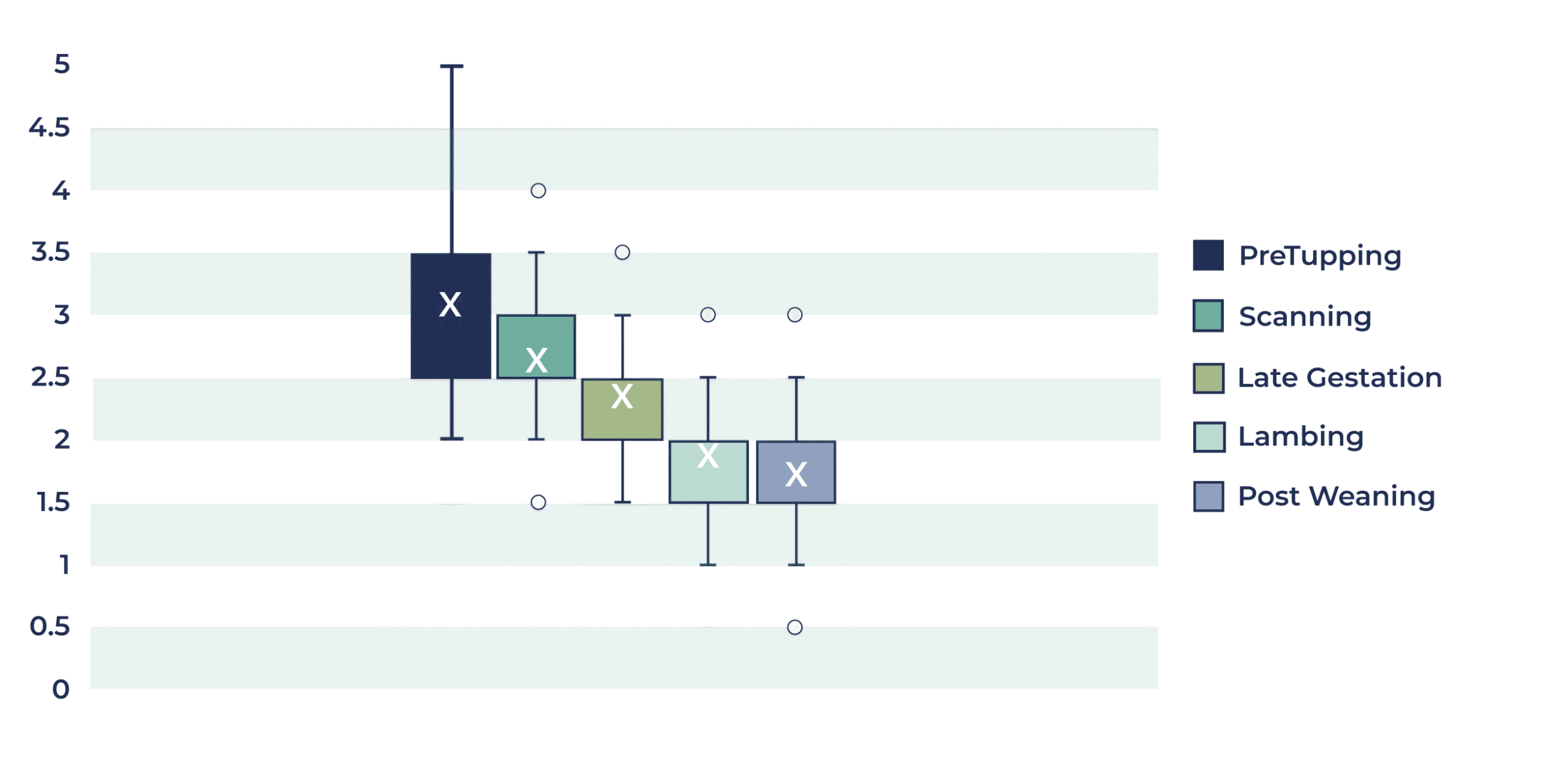
Box and whisker plots of body condition score data from the flock for each production cycle stage 2023/24.
2. Colostrum quality and passive transfer of immunity
Forty percent of pre-suckled colostrum samples had IgG concentrations below the acceptable threshold of 50 g/L. Meanwhile, approximately 17% of lambs suffered FTPI, as their serum IgG concentrations fell below the 15 g/L benchmark. A statistically significant positive association (p<0.01) was observed between ewe colostrum IgG and lamb serum IgG, highlighting the importance of pre-lambing nutrition and BCS in supporting passive immunity.
A critical yet often overlooked factor was the hygiene of colostrum handling. A striking 66% of feeder and store samples exceeded total coliform count (TCC) limits. High bacterial loads impair IgG absorption via multiple mechanisms, including binding of antibodies in the gut, and enterocyte damage. This inhibits passive transfer of immunity, even when colostrum IgG levels are adequate.
|
Outcome variable |
Predictor Variable |
Co-efficient |
95% CI |
P-value |
|
Serum IgG (g/L) |
Colostrum IgG (g/L) |
0.22 |
0.10– 0.35 |
<0.01 |
Final multivariable linear models for risk factor variables significantly associated (p<0.05) with serum RID (g/L) from 76 lamb serum samples collected during lambing 2024 with ewe included as a random effect.
3. Infrastructure and management pressures
A lambing peak of 450 ewes in just two weeks created intense pressure on space and resources. Feed space was insufficient to allow access for an expanding flock, which compounded nutritional deficits. To address this, the farm increased TMR delivery from once to twice daily and planned infrastructure expansion into polytunnels for 2025.
Action plan and SMART goals
- BCS Management: Aim for ≥80% of ewes to maintain BCS 2.5–3.0 from scanning to lambing; continue BCS monitoring throughout the production cycle (pre-tupping, scanning, late gestation, lambing, weaning).
- Nutrition and Feed Access: Ensure 15 cm/ewe feed space and improve intake monitoring; expand lambing facilities to match flock growth.
- Colostrum Management: Minimise routine supplementation; encourage dam-suckling; improve colostrum storage hygiene and cleaning protocols; consider using high-quality colostrum replacers when necessary.
- Hygiene: Introduce stringent cleaning routines for all colostrum equipment; increase lamb feeder numbers to allow proper rotation and sanitation for lambing 2025.
Ultimately, farm-specific, data-driven interventions—not new products—were key to improving neonatal lamb outcomes in this case.
This work was led by Ali Haggerty, Stewartry Veterinary Centre, funded by QMS Monitor Farm Project and Livestock Health Scotland in collaboration with staff at Glasgow University who are all acknowledged..
Conclusion: Two systems, one core philosophy
These farms were very different—but both saw major gains by investing in attention to detail, not just products. Whether through invested relationships to change manage over a period of time (as in the dairy herd) or structured, time-limited investigation (as with the sheep flock), the common factor was a 360° view of the system—husbandry, nutrition, and management with a focus on the people who deliver them.