Getting the basics right: Colostrum management

AUTHOR: Lahra Harcourt-Brown
BVM&S MRCVS
Large Animal Vet and Consultant
All keepers of ruminants will be well aware of the many benefits of colostrum and acutely aware of the importance of good management. Getting these first building blocks right is crucial for the ongoing health and welfare of the newborn & lack of this essential protection can have long-term detrimental consequences.
What is FPT?
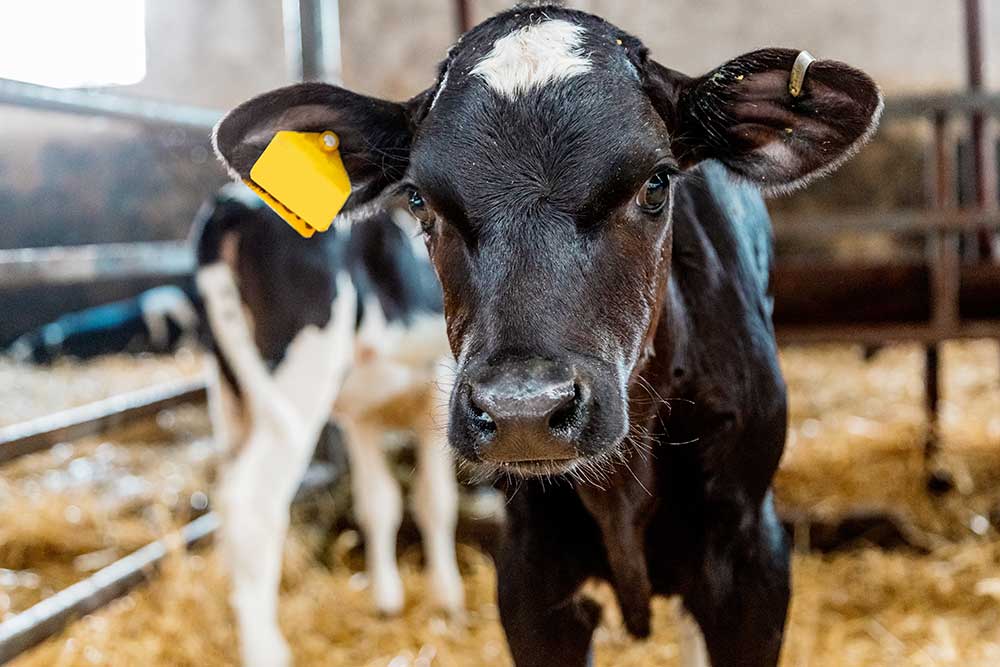
Failure of passive transfer (FPT) is the failure of a neonate to absorb adequate colostral immunoglobulins within the first hours of life.
FPT is linked with an increased risk of mortality and morbidity. Prevalence of FPT can range from 20-40% and is well categorised as a major challenge to any livestock rearer (Raboisson, Trillat and Cahuzac, 2016).
FPT is likely to contribute to a higher morbidity on farms, leading to potential increased infectious disease prevalence and subsequent antimicrobial use. It is of significant importance when considering optimal efficiency in livestock systems.
What is in colostrum?
Colostrum is termed liquid gold, and with good reason. Within colostrum are huge numbers of immunoglobulins, many of which are specific to the dam. We can even promote specific protection via vaccination with delivery of this protection through the colostrum to these otherwise naïve animals (Playford and Weiser, 2021).
Colostrum is rich in micro and macro nutrients – immunoglobulins, peptides with anti-microbial activity, growth factors, fat and lipids, vitamins and minerals, carbohydrates, proteins and peptides.
Proteins and Peptides: Colostrum contains higher total protein contents than mature milk, with higher volumes of immunoglobulins and casein.
Casein is both an energy source and a factor which ‘possesses immune-regulatory, antibacterial, and anti-inflammatory properties’ affecting the immune system. The protein content of the colostrum is clearly important for the formation of good immune protection.
Carbohydrates: Many carbohydrates are abundant in colostrum, important sources of energy and potential prebiotic activity.
Fat and Lipids: The presence of fat in colostrum is both an energy source and is also shown to have numerous other effects in the body, from neuronal development to activation of the immune system.
Vitamins and Minerals: Important for metabolic processes, bone development and antioxidant activity. Complex involvement in the formation of a robust immune system.
New insights on cleanliness: Five key questions answered
QUALITY
Quality of colostrum will vary significantly between animals – testing the colostrum (with something as cheap and simple as a refractometer) will enable selection of the highest possible colostrum to top-up at-risk calves. More information for testing colostrum quality can be found readily on the AHDB website.
QUANTITY
Lambs: 200ml/kg bodyweight within the first 24 hours – normally 200ml within two hours and regular top-ups after this.
Calves: 10% of bodyweight or 3L of colostrum ASAP after birth and certainly before 6 hours of age.
Thought should be paid to weak lambs and calves – they will not be able to sustain vigorous sucking to achieve a full feed. Before they start feeding, they are burning their glucose energy – and when that runs out, fat reserves and eventually protein. It is crucial we step in to supplement these animals before they use up their energy reserves unnecessarily. Providing ‘kick-starter’ drenches containing glucose helps prolong their energy reserves. Other factors such as weather, difficulty of the birthing process and formation of a maternal bond will all affect a neonatal ruminant’s colostrum intake.
QUICKLY
Colostrum needs to be delivered fast. The ability of a newborn ruminant to absorb colostrum will be reduced every minute after birth. It is critical to act fast. For instance, a calf born at 11pm cannot wait until the morning for its first feed. Waking to find this calf has not sucked adequately will undoubtedly lead to an FPT in this individual, even if you supplement them in the morning.
GENTLY
It is imperative that, although we should be in a rush to supplement colostrum, rushing the delivery is not recommended.
Colostrum supplementation via stomach tubing is a quick and efficient way of delivering milk; however, care to do this gently is key. Internally, it is important for the milk to be delivered into the correct stomach. Calves and lambs have a clever method of closing their first three stomachs and creating a direct path to their fourth stomach via the oesophageal groove. Rushing tubing or flooding the guts with milk will result in overspill to the wrong stomachs, leading to stagnation of milk, bacterial proliferation and colic. In some cases, this can result in ruminal acidosis, scour and even death.
Gentle handling is key for good welfare in neonatal care, but is especially important when feeding. Undue stress on the newborn ruminant is not necessary and is not beneficial.
CLEANLY
Emerging evidence of the cleanliness of colostrum during the collection and storage process. High bacterial presence in colostrum is obviously not beneficial, and thinking about the risk factor on your farm is key to reducing the chance of delivering bacterial-laden soup to your newborn ruminants.
Risk factors include: the number of stages before refrigeration/freezing, quality of storage vessels (lidded buckets), hard brush and hot water scrubbing with detergent between use, storage temperature & cleanliness of tubes/bottles and teats. This data was collected from dairy farms but is just as relevant for beef and sheep farms. Common sense, yes, but it is surprising how these factors are missed on most high-quality farms.
Robust colostrum management plan – more important than you think?
We are lucky to have several tests to check the quality of passive transfer in newborn calves. Quantification of the quality of this passive transfer is so important, providing a baseline for the PT levels on your farm. It is recommended to test a proportion of calves to work out their level of passive transfer. Bragg et al. (2020) have shown 15% of suckler calves fall below the minimum accepted standard of immunoglobulins. 37% of calves fell below the recommended volume of immunoglobulins. Although the importance of FPT in lambs is readily accepted, similar figures are not available for sheep.
With such staggering potential for failure of passive transfer, likely to be influenced by the quality, cleanliness and the calving process, a multi-faceted colostrum management system tailored specifically to your farm is key to improving chances of passive transfer success and achieving the optimal health outcomes on your farm.
This is one area, due to the importance of heifer rearing, that many dairy farms have nailed. We have a lot of catching up to do in the beef and sheep space, with a few proactive farmers leading the way to prioritising their colostrum management practices.
Sources:
Playford, R.J. and Weiser, M.J. (2021). “Bovine colostrum: Its constituents and uses,” Nutrients, 13(1), p. 265. Available at https://doi.org/10.3390/nu13010265.
Raboisson, D., Trillat, P. and Cahuzac, C. (2016). “Failure of passive immune transfer in calves: A Meta-Analysis on the consequences and Assessment of the economic impact,” PLoS ONE, 11(3). Available at https://doi.org/10.1371/journal.pone.0150452.
Bragg, R. et al. (2020). “Prevalence and risk factors associated with failure of transfer of passive immunity in spring born beef suckler calves in Great Britain,” Preventive Veterinary Medicine, 181. Available at https://doi.org/10.1016/j.prevetmed.2020.105059.