Precision Livestock Extensive Farming (PLEF) - what are the benefits and what is holding us back?

AUTHOR: Lahra Harcourt-Brown
BSc(Hons) BVM&S MRCVS
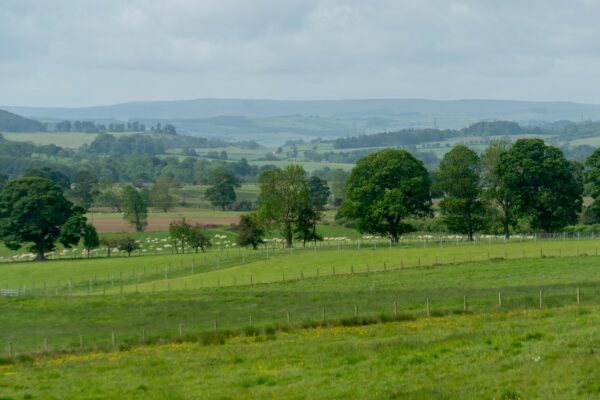
Precision livestock farming (PLF), which involves the analytical monitoring of individual animals 24/7, is commonplace in many intensive farming systems. There is an increasing discussion about the applicability of this technology to extensive farming systems. With many dipping their toes into extensive monitoring with virtual fencing, it is worth considering the many applications of PLEF.
PLEF may include satellite imagery of pasture, individual animal monitors, virtual fencing, animal trackers, ruminal boluses, and water level sensors, amongst others.
Advantages to PLEF
- Improved grazing knowledge, preventing under- and over-grazing, and analysing images of pasture to plan sustainable grazing patterns.
- Greater understanding of grazing livestock behaviour and habits, guiding choices for pasture management in line with health and welfare.
- Ability to appropriately monitor water intakes to ensure hydration needs are met, monitoring trends in consumption to guide provision and access.
- Virtual fencing offers the opportunity to have some flexibility in pasture management, perhaps informed by other data collected on pasture quality.
- Enables monitoring of interactions between livestock and wildlife, although most information is from Spain and the US. Nonetheless, it is easy to imagine how useful this information could be when considering TB transmission.
- Less relevant to the UK, but interesting all the same, livestock-predator interactions, in particular AI use to manage wolves and livestock in Germany.
Clearly, any data obtained will be useful, but the concern is with the practicality of monitoring extensively farmed sheep and cattle.
Limitations to PLEF
There are several factors likely to influence the uptake of PLEF on our extensive farms. These include the obvious financial landscape of farming, lack of rural access to reliable internet, battery life and concerns about GPS accuracy due to topography and tree or shrub cover, among others.
However, a mix of sensor use, along with increased understanding of the net benefits and financial costs of using advanced technologies, will inform the likelihood of uptake on working farms.
Dede J, Wewetzer D, Förster A. 2023. AI in the wild: challenges of remote deployments. Proceedings of the INFORMATIK 2023—Designing Futures: Zukünfte Gestalten. Bonn (Germany): Gesellschaft für Informatik e.V. p. 1583–1589. ISBN: 978-3-88579-731-9. doi: 10.18420/inf2023_161.
Pinna, D., Sara, G., Todde, G. et al. Advancements in combining electronic animal identification and augmented reality technologies in digital livestock farming. Sci Rep 13, 18282 (2023). https://doi.org/10.1038/s41598-023-45772-2
Further Research:
PLEF is an ongoing area of mass research, developing many tools to aid extensive livestock farming. Perhaps one of the most entertaining PLEF tools is ‘SmartGlove’, which combines electronic animal identification with augmented reality technologies. This is a genuine project in development: glasses that would provide real-time information in the field about the individual animal whose tag you are viewing. Quite how applicable this will be in practice, or the price of such technology, remains to be seen.
Further Reading:
Bernabucci, G., Evangelista, C., Girotti, P., Viola, P., Spina, R., Ronchi, B., … Primi, R. (2025). Precision livestock farming: an overview on the application in extensive systems. Italian Journal of Animal Science, 24(1), 859–884. https://doi.org/10.1080/1828051X.2025.2480821