Weaning Lambs: Applying HACCP To Reduce Disease, Optimise Growth and Set Up For Success In The Next Cycle
AUTHOR: Ed Hill
BVMS Cert AVP(Sheep) MRCVS
The weaning of lambs represents a critical time on sheep farms; done well and it protects the health and optimises the growth rate of lambs whilst allowing us to set up ewes in the best possible condition for success in the next breeding cycle. Get it wrong and we raise the risk of disease, use more medicines and negatively affect the scanning % the following year. Despite this, on many UK sheep farms weaning still takes place on a broadly fixed date in the calendar.
HACCP (Hazard Analysis and Critical Control Points) is a systematic framework for recognising hazards, identifying critical control points, setting intervention thresholds, monitoring, setting corrective actions and record keeping. HACCP is typically used in food production systems to protect food safety, but can also be applied to livestock animal health (Gascoigne, 2018).
This technical note demonstrates by applying HACCP to weaning lambs we can maximise this year’s lamb crop, set up for success in the next cycle, reduce medicine usage and identify areas for continual improvement.
Hazard 1. Compromised Lamb Daily Live Weight Gain (DLWG)
DLWG is a key driver of sheep farming profitability, and pre-weaning DLWG is under the influence of ewe lactation, grass quality/quantity, genetics, parasite challenge and trace element imbalance. Individual factors such as lameness, joint ill and mastitis can also impact DLWG. Where DLWG has become compromised we can take corrective action by altering our weaning date.
Critical Control Points
Pre-weaning DLWG should be >250-300g/d. Where DLWG falls to below 250g/d the CCP threshold has been crossed.
Monitoring
Monitoring of lamb growth rate should begin from at least eight weeks of age (this date should be established from the middle date of lambing).
Corrective Actions
When pre-weaning DLWG has dropped below 250g/d, weaning date should be brought forward. Causation of poor DLWG should be established. Ewe BCS, forage availability, PGE and trace elements are discussed below. Disease processes such as lameness, joint ill and mastitis can be identified by clinical examination and thorough history taking.
Hazard 2. Compromised Ewe Body Condition Score (BCS)
For maximum efficiency, health and production, ewe BCS should be maintained as close to 3/5 year-round. Regaining lost BCS is costly and inefficient compared to maintaining; it can take six to eight weeks for a ewe to regain one unit of BCS on good quality grazing and even longer if the quality is poor or quantity restricted
Critical Control Points
Average BCS at weaning should be 3/5. Where BCS falls to 2/5 or below the CCP threshold has been crossed.
Monitoring
Monitoring and recording of ewe BCS should be a year-round process but a score taken at eight weeks is critical in respect of weaning.
Corrective Actions
If ewe BCS has dropped to 2/5 at eight weeks weaning should be brought forward. Convincing farmers to wean early based on ewe BCS may be challenging for fear of compromising growth rate in this year’s lamb crop. It is therefore vital to stress that not weaning early in the face of poor BCS will likely set up a vicious cycle of costly BCS loss with negative impacts on next year’s scanning %, lamb survival and growth. If farms have a consistently high % of ewes with poor BCS disease investigation should be considered for Maedi Visna, OPA and Johne’s.
Hazard 3. Compromised Forage Availability
Where forage availability becomes compromised pre-weaning then ewes and lambs will start to compete for grass with negative impacts on both. Careful forage planning is important but extremes of weather are more frequent and as such careful monitoring and flexibility is critical.
Critical Control Points
Grass availability may be done subjectively but it is better to be specific and measurable. For optimal lamb growth grass covers should be 2000-2700kg/DM/ha. If grass cover has become less than 2000kg/DM/ha then the CCP threshold has been crossed.
Monitoring
The frequency of monitoring grass covers will be dictated by the system and period of growth but may be as frequently as every five days in rotational systems at times of rapid growth. Monitoring may be done simply and cheaply using a sward stick or using a plate meter.
Corrective Actions
Where forage availability pre-weaning drops to below 2000kg/DM/ha ,either ewes and lambs should be moved to better cover, if available, until weaning, or weaning date should be brought forward. Climatic conditions will account for some year-on-year variability but to ensure long term sustainability in this regard farms should consider adopting rotational grazing systems that allow for greater dry matter yield and utilisation per hectare. Planting of diverse sward types and inclusions of fescues, timothy, red clover, lucerne and plantain will extend the grassing season at both ends and have drought resilience but need careful grazing management and may only be suitable in certain soil types (AHDB, 2025).
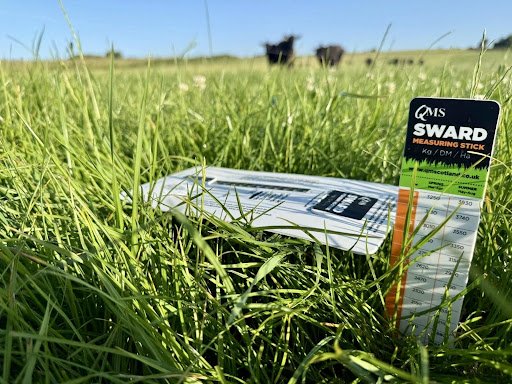
Fig. 1 A sward stick reading of 6-10cm equates to approximately 2000-2700kg/DM/ha
Hazard 4. Parasitic Gastroenteritis (PGE)
PGE potentially poses the biggest threat to weaned lambs. Mismanagement of the threat will lead to development of resistance and a compounding problem.
Critical Control Points
A mob faecal worm egg count (FEC) of greater than 200-500 epg indicates worms may be having an impact on some individuals with the group and treatment of these individuals may be required. A mob FEC of greater than 500 epg indicates a moderate to high number of individuals within the group requiring anthelmintic treatment (Stubbings, 2020).
Monitoring
Mob FECs of lambs should be monitored every 3-4 weeks from approximately six weeks of age. DLWG should be monitored as previously described and gold standard would be to monitor this down to individual lamb level. Where anthelmintic treatment is indicated, efficacy of treatment should be monitored with a post-treatment FEC reduction test.
Corrective Actions
Where CCP FECs have been exceeded, some anthelmintic treatment is likely to be required. It is important to note however that within a population of lambs only a relatively small proportion will be clinically affected by PGE. Therefore, treatment should be targeted ideally only at those lambs performing under a certain threshold (e.g 250g/d). Where individual DLWG data is unavailable treatment should be targeted at the lightest in the group or those showing a high degree of dag.
Whilst short term corrective actions in the form of anthelmintic treatment are crucial, longer term holistic worm control should be built into the farm’s strategy. Genetic resilience can by developed in self replacing flocks by using rams with desirable FEC and/or igA EBVs. A long-term grazing strategy should be developed to generate truly safe grazing for lambs to move to post weaning. Alternative forages should be included in rotations; lambs grazing species such as chicory and plantain show reduced gastrointestinal parasitism whilst maintaining optimal growth rates both through natural anthelmintic properties and providing a high level of protein and energy nutrition (Grace, 2019).
Hazard 5. Trace Element Imbalance
The trace elements copper, cobalt, selenium and iodine are critical for growth and immunity. Where intakes are restricted either can be compromised. Weaned lambs in conventional farming systems are at particular risk of deficiency, though this will vary considerably by geographic area.
Critical Control Points
Post weaning DLWG should be at least 200g/d. Where growth rates drop below this the CCP threshold has been crossed. Where poor macro nutrition and parasitic gastroenteritis have been excluded as causes, trace element imbalance should be considered next.
Monitoring
Where suspicions about trace element deficiencies exist, a comprehensive diagnosis should be made using a combination of animal blood samples, forage analysis and soil sampling. Soil sampling should form part of a farms routine monitoring of soil health with paddocks getting sampled approximately every three years.
Corrective Actions
Where deficiencies exist, short term solutions can be found in the form of drench or bolus supplementation. However, a more sustainable long-term approach will address what plants the sheep are eating and how they harness the trace elements within the soil. Lambs grazing diverse herbal leys have been shown to have higher levels of selenium and cobalt than those grazing conventional ryegrasses (Cooledge et al, 2024). However, it is important to address underlying soil issues first such as pH and organic matter content. Incorporating trees in a silvopasture system allows for greater nutrient cycling and lambs browsing species high in trace elements such as willow, ash, poplar and alder. Additional benefits will be seen in the form of increased shelter, drought resilience and reduced soil compaction (The Soil Association, 2019).
Hazard 6. Incomplete Rumen Adaption
Much has been made above of the potential for earlier weaning where certain thresholds are compromised. It is however crucial to note that weaning does not take place before ten weeks of age as the rumen has not yet fully transitioned from a pre-ruminant state. Additionally, we know that the rumen takes approximately three weeks to adapt to a change in diet and a sudden change will lead to reduced growth rate and immune compromise.
Critical Control Points
Weaning should not take place before ten weeks of age. Allow a period of transition onto post-weaning diet. This is especially important if moving from conventional grass/clover to herbal leys or other forage crops such as rape or kale.
Monitoring
Regular monitoring of lamb DLWG in the peri-weaning period will highlight if any significant and unexplained reduction in gain has occurred.
Corrective Actions
Where previous errors have been identified in this area, they should be redressed for future lamb crops. A compact lambing season will also significantly help this; a tighter spread of lamb age means fewer lambs will be close to ten weeks when the weaning decision is made.
Hazard 7. Stress Induced Immune Compromise
Weaning is an inherently stressful procedure. Stress raises cortisol levels which in turns leads to immune suppression, leaving lambs more susceptible to diseases such as parasitic gastroenteritis, clostridial disease and pneumonia.
Critical Control Points
Post weaning mortality should be 1% or less. Where the threshold has been exceeded it can be assumed a preventable disease process has occurred.
Monitoring
Mortality and morbidity should be recorded. Unexplained losses should undergo post mortem examination.
Corrective Actions
Stress at weaning should be minimised. Lambs should be handled by trained stock-people and no other task carried out on weaning day. Complete courses of clostridial/pneumonia vaccination should be completed at least two weeks prior to weaning. Stress can be further reduced by keeping lambs on fields they were on (and removing the ewes) for several days prior to moving on. This will also have additional benefits as part of managing worm resistance as discussed above. Lambs should also be maintained in social groups immediately post weaning before later being subdivided by weight, sex etc.
Record Keeping – Weaning KPIs
The final stage of HACCP planning is to ensure adequate record keeping. Alongside good record keeping, the setting of KPIs allows for target setting and continual improvement. Table 1. below sets out some weaning KPIs. KPIs may be compared to suggested targets, benchmarking groups or simply aiming for continual improvement on individual farms.
|
Key Performance Indicator |
Suggested Target |
|
Average 8 week lamb weight (kg) |
>20kg |
|
Average age at weaning |
90 days |
|
Average weight at weaning |
>30kg |
|
Average daily live weight gain to weaning |
>250g/d |
|
Average ewe BCS at weaning |
3/5 |
|
% lambs wormed at weaning |
<20-30% |
|
Post weaning mortality |
<1% |
Table 1. Suggested Weaning KPIs
Summary
Weaning represents both a risk to lamb health and production but done well it represents an opportunity to optimise production, reduce medicine usage and set up for success in the next breeding cycle. Adaption of HACCP principles to weaning allows us to monitor for and correct the hazards with long term improvement in mind. A summary is shown in Table 2.
|
Hazard |
Critical Control Threshold |
Corrective Actions |
|
Compromised Lamb DLWG |
250g/d |
Wean early |
|
Compromised Ewe BCS |
2/5 |
Wean early, Investigate “iceberg” diseases. |
|
Compromised Forage Availability |
<2000kg/DM/ha |
Wean early. Grazing planning. Incorporate multispecies, diverse swards. |
|
Parasitic Gastroenteritis |
Mob FEC 200-500epg |
Targeted anthelmintic treatment. Built genetic resilience. Plan for safe grazing. Incorporate multispecies, diverse swards. |
|
Trace Element Deficiency |
<250g/d with other factors excluded |
Short term bolus/drench supplementation. Incorporate multispecies, diverse swards. Silvopasture systems. |
|
Incomplete Rumen Adaption |
Weaning <10 weeks <3 week ration transition |
Compact lambing period. Introduce lambs to post weaning diet prior to weaning. |
|
Stress Induced Immune Compromise |
>1% post weaning mortality |
No other interventions at weaning. Vaccines done in advance. Skilled stock people. Leave lambs on weaning pasture for days. Reduce social disruption. |
Table 2. HACCP applied to weaning lambs
Sources:
1. AHDB. Online. (2025). www.ahdb.org.uk/knowledge-library/herbal-leys
2. Emily C. Cooledge, Nigel R. Kendall, Jonathan R. Leake, David R. Chadwick, Davey L. Jones, (2024). Herbal leys increase forage macro- and micronutrient content, spring lamb nutrition, liveweight gain, and reduce gastrointestinal parasites compared to a grass-clover ley. Agriculture, Ecosystems & Environment. 367.
3. Gascoigne, E., Morgan, E. R., Lovatt, F., & Vineer, H. R. (2018). Controlling nematode infections in sheep: application of HACCP. In Practice, 40(8), 334-347
4. C. Grace, M.B. Lynch, H. Sheridan, S. Lott, R. Fritch, T.M. Boland. (2019). Grazing multispecies swards improves ewe and lamb performance. Animal, 13(8), 1721-1729
5. Stubbings, L., Bartley, D., Busin, V., Lovatt, F., Page, P., Rose Vineer, H., Skuce, P. (2020) SCOPS Technical Manual. http://dx.doi.org/10.17605/OSF.IO/SQA4E.
6. The Soil Association. (2019). The Agroforestry Handbook. https://www.soilassociation.org/media/19141/the-agroforestry-handbook.pdf