Technical Note
Current Areas in Ruminant Colostrum Research
Exploring Advances in Neonatal Immunity and Health

AUTHOR: Ali Haggerty
BVMS CertAVP MVM MRCVS
Veterinary surgeons must recognise colostrum’s critical role in neonatal immunity, future growth and survival. Colostrum management, as a component of youngstock management, requires an understanding of biological processes to support animal health and productivity without defaulting to pharmaceutical intervention. Given its significance, research continues to expand on the global stage and key areas are highlighted below.
Bioactive Components Beyond IgG
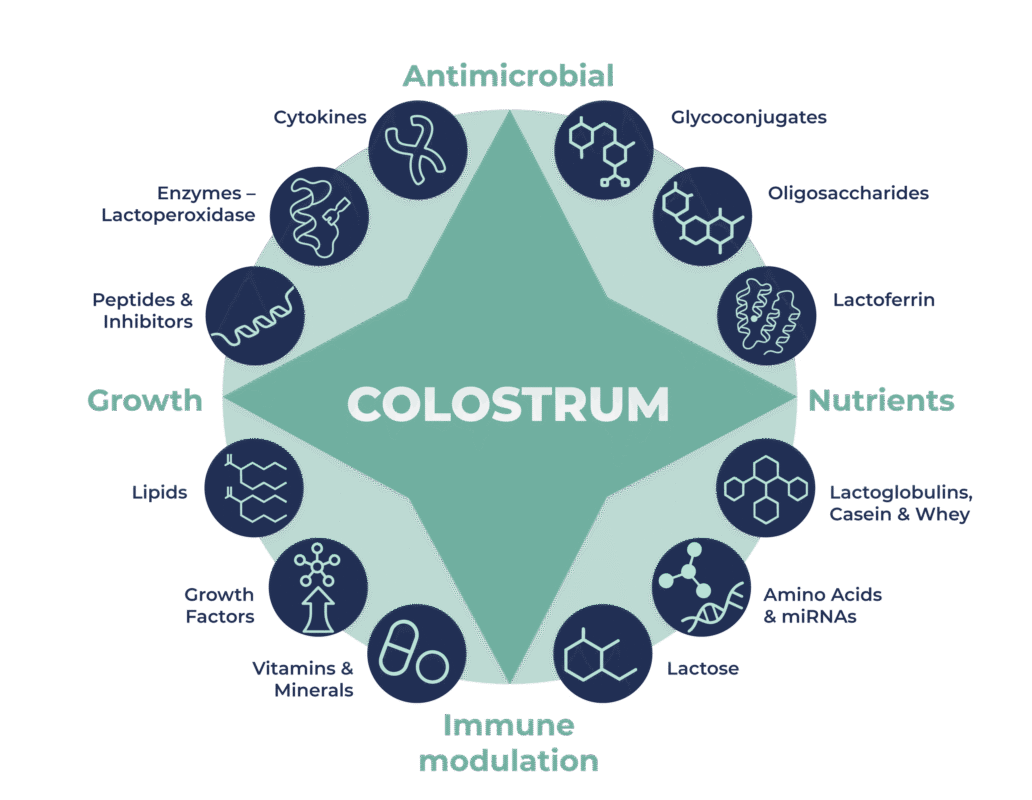
Bioactives act beyond the basic nutrient and passive immunity functions and are involved in positive neonatal development
Focus on microRNAs: short, non-coding RNAs that regulate gene expression post-transcriptionally by acting on messenger RNA. The maternal signals (miRNA) in colostrum communicate with newborns, influencing growth and development. Researchers are exploring miRNAs role in:
- Gut Microbiota Development: supports the establishment of beneficial microbial populations promoting tolerance to commensal bacteria
- Intestinal Integrity: promote gut barrier function through tight junction formation, which is important in disease prevention caused by, e.g., diarrhoea pathogens.
- Influence neonatal tissue development.
Colostrum And Its Role In Neonatal Diarrhoea
Bovine colostrum offers a promising alternative and adjunctive treatment to neonatal diarrhoea in a world where antimicrobial resistance is a growing global public health concern. It:
- Is rich in immunoglobulins, bioactive compounds, and nutrients
- supports gut health, immune development, and metabolic resilience
Research gap: It is not known whether colostrum can lead to improved recovery from diarrheic symptoms or what the proper treatment protocol should be (i.e., required dosage and quality level of the colostrum. Most research focuses on hyperimmune colostrum)
On Farm Colostrum Management Strategies
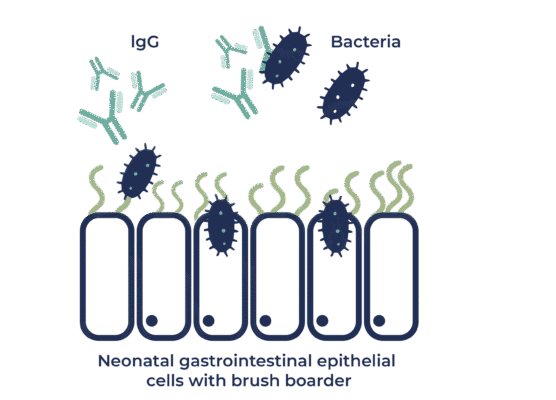
- Bacteria bind free IgG in the gut, blocking absorption.
- Bacteria inhibit IgG uptake across enterocytes transport channels.
- Bacterial epithelial damage triggers faster gut closure, reducing IgG uptake.
- Excessive multiplication in colostrum reduce the quality of colostrum and transition milk in terms of IgG, bioactives and nutrition.
- On farm storage of colostrum is a critical control point of colostrum management protocols, and to maintain adequate supply in times of shortages
- Current work looks at overcoming challenges around effective colostrum storage at the coalface using potassium sorbate.
The diverse research areas in ruminant colostrum underscore its pivotal role in youngstock health. Understanding the importance of colostrum is a building block of the founding principles of Ruminant Revival Ltd – providing alternative solutions to livestock producers, reducing the need for chemical or pharmaceutical inputs to control and prevent disease.
References:
Carter, H.S.M.; Renaud, D.L.; Steele, M.A.; Fischer-Tlustos, A.J.; Costa, J.H.C. A Narrative Review on the Unexplored Potential of Colostrum as a Preventative Treatment and Therapy for Diarrhea in Neonatal Dairy Calves. Animals 2021, 11, 2221. https://doi.org/10.3390/ani11082221
Denholm, K., 2022. A review of bovine colostrum preservation techniques. J Dairy Res 89, 345-354
Du, Y., Gao, Y., Hu, M. et al. (2023) Colonization and development of the gut microbiome in calves. J Animal Sci Biotechnol 14, 46.
Haggerty, A., Silva, E., Anderson, T., Bell, D., Mason, C., Denholm, K.S., 2025. Identifying critical control points for colostrum contamination in first milking colostrum from Scottish dairy herds. Preventive Veterinary Medicine 239, 106514.
Silva, F.G., Silva, S.R., Pereira, A.M.F., Cerqueira, J.L., Conceição, C., 2024. A Comprehensive Review of Bovine Colostrum Components and Selected Aspects Regarding Their Impact on Neonatal Calf Physiology. Animals (Basel) 14.
Van Hese, I., Goossens, K., Vandaele, L., Opsomer, G., 2020. Invited review: MicroRNAs in bovine colostrum—Focus on their origin and potential health benefits for the calf. Journal of Dairy Science 103, 1-15.